How Ritedose Supports a Stable and Reliable Medication Supply

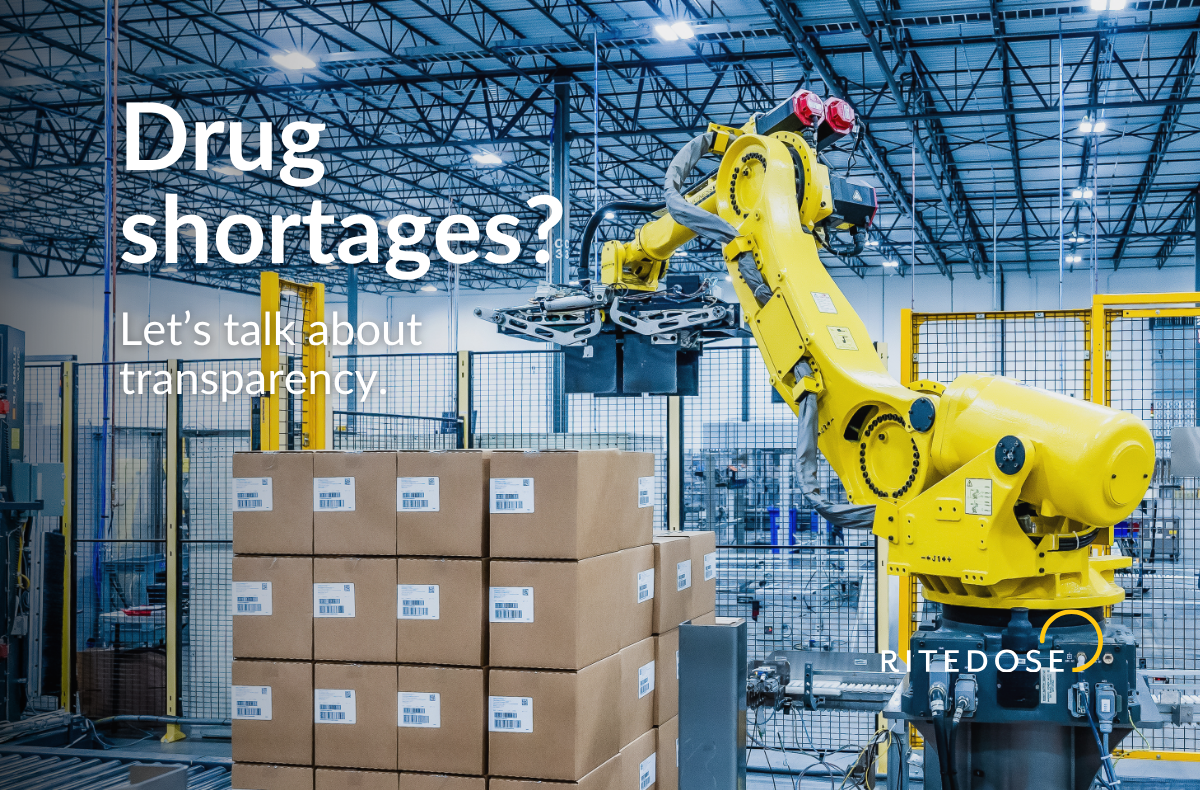
Automated pharmaceutical warehouse with a yellow robotic arm stacking cardboard boxes, illustrating Ritedose’s focus on transparency, efficiency, and solutions for drug shortages.

Learn how Ritedose safeguards patients’ access to critical medications with responsive, high-quality pharmaceutical manufacturing.

Understanding Today’s Drug Shortage Landscape

Drug shortages are serious problems. In a shortage, patients and caregivers no longer have access to needed, even life-saving medicines, often for an extended period.  And yet, drug shortages have been a part of the pharma landscape for decades. And it’s not improving.

Recent U.S. government actions, particularly tariffs and other actions curbing imports, have shown how vulnerable international pharma supply chains are. Branded pharmaceuticals (which have patent protection and other manufacturing advantages) are largely made in the United States (or other countries and regions) where those drugs are sold. Generic drugs are a different story, as this article in Science points out.

Generic medicines, which have lost patent protections and typically do not allow for the same margins as branded drugs, account for over 80% of all global prescriptions. But they only make up to 20-30% of global pharmaceutical market value. This means two things: critical medicines are more accessible to patients; however, their supply is more susceptible to disruptions.

For decades, this meant that generic manufacturing moved to a handful of countries (India and China, mainly) that could make these drugs at very high volumes and lower prices. By raising the costs of these imports (through tariffs and other barriers), firms that can’t operate under narrower earnings margins will cease manufacturing, adding to the risk of shortages.

Here, the government’s answer has been to reshore, to bring drug manufacturing back to this country. This is not an easy task. It takes investment, infrastructure and lead times measured in years, not weeks or months.

Examples of Ritedose Supporting Supply Stability

Responding to National Respiratory Medication Needs

This year, we addressed a nationwide shortage when we made the 0.5% (2.5 mg/0.5 mL) strength of generic albuterol sulfate inhalation solution. This dosage of albuterol has been on the FDA’s national shortage list since 2022.

How Ritedose Helps Address Drug Shortages

Responsive Manufacturing for Urgent Market Needs

At Ritedose, we provide manufacturing for both branded and generic drugs using our state-of-the-art CDMO (contract development and manufacturing organization) facility. Historically, we have produced respiratory and ophthalmic medications. Over time, we have increased our capacity for manufacturing and added additional expansions, including advanced Blow-Fill-Seal (BFS) capabilities and construction of new analytical laboratories. These investments continue to augment our manufacturing, making the total supply chain resiliency more effective.

Capacity and Expertise That Prevent Manufacturing Bottlenecks

This year, the U.S. Governmental Accountability Office (GAO) recommended collaboration and coordination among government regulators and manufacturers, and offered a series of solutions that could alleviate these shortages. This is their list of collaboration practices:

  • Define common outcomes—identify crosscutting challenges and opportunities, and define long- and short-term outcomes
  • Ensure accountability—find ways to monitor, assess, communicate and reward progress
  • Bridge cultures—find ways to build trust and develop common language and terminology
  • Clarify roles and responsibilities—identify all key participants and determine leadership and other tasks
  • Resources and information—find ways to ensure collaboration and incorporate data management that provides reliable and visible data
  • Develop written agreements—document collaboration plans and operations and make sure these are continually updated and implemented

The Future of Reliable Drug Manufacturing

Preventing and managing drug shortages is a collaborative effort among government, industry stakeholders, caregivers, patients and members of the public. Only then can we establish transparency and a clear path to alleviate unnecessary and dangerous shortages.

At Ritedose, we’re committed to ensuring access to much-needed, lifesaving medications. Our response to these complex issues is simple and unwavering: it’s every manufacturer’s responsibility to plan intentionally and safeguard supply. Patients should always be able to receive the medications they rely on, without delay and without doubt.

Learn more about our manufacturing process, products, or contact us to learn how we can partner with you.

Frequently Asked Questions

Why do generic medications face a higher risk of supply disruptions?

Summary: Generic medications often operate under tighter economic margins, making their supply chains more vulnerable to manufacturing and market disruptions.

Full answer: Generic medicines provide affordable treatment options but are frequently produced in highly competitive markets with lower profit margins. Although generic medicines account for more than 80% of global prescriptions, they represent only 20% to 30% of the global pharmaceutical market’s value. Ritedose has increased its manufacturing capacity through advanced Blow-Fill-Seal capabilities and new analytical laboratories to help strengthen supply chain resilience.

How can domestic pharmaceutical manufacturing improve medication supply stability?

Summary: Domestic manufacturing helps reduce dependence on overseas production and strengthens pharmaceutical supply chain reliability.

Full answer: Much of generic drug manufacturing has moved to countries such as India and China, where companies can produce medications at high volumes and lower costs. Expanding pharmaceutical manufacturing within the United States provides greater control over production capacity, improves responsiveness during disruptions, and supports long-term medication availability. Reshoring requires investment, infrastructure, and lead times measured in years rather than weeks or months.

Why is manufacturing capacity important in preventing drug shortages?

Summary: Greater manufacturing capacity enables companies to respond more effectively when demand increases or supply disruptions occur.

Full answer: Adequate production capacity allows manufacturers to scale operations when market conditions change or shortages develop. Organizations that invest in facility expansion, advanced equipment, and additional manufacturing lines are better positioned to maintain supply continuity. Ritedose has expanded its manufacturing capacity, advanced Blow-Fill-Seal capabilities, and analytical laboratory infrastructure to strengthen supply chain resilience.

How can investments in pharmaceutical facilities strengthen supply chain resilience?

Summary: Facility investments in technology and automation increase capacity, improve efficiency, and support long-term manufacturing reliability.

Full answer: Modern pharmaceutical facilities support higher production volumes while maintaining strict quality standards. Investments in manufacturing infrastructure, analytical laboratories, automation, and specialized production technologies help manufacturers improve efficiency, expand capacity, and reduce the likelihood of supply interruptions. Increased efficiency and flexibility also position Ritedose to expand its packaging options as customer needs evolve.

Why is collaboration important in addressing national drug shortages?

Summary: Collaboration helps manufacturers, regulators, and healthcare stakeholders coordinate solutions that improve medication availability.

Full answer: Drug shortages involve participants across the healthcare system. Manufacturers, government agencies, healthcare providers, and supply chain organizations each contribute to improving transparency, sharing information, coordinating responses, and developing long-term strategies. Effective collaboration requires shared goals, reliable data, clear responsibilities, consistent communication, and agreements that participants regularly update and implement.

How do advanced analytical laboratories support pharmaceutical manufacturing?

Summary: Analytical laboratories help verify product quality, support manufacturing processes, and strengthen regulatory compliance.

Full answer: Modern analytical laboratories perform critical testing throughout pharmaceutical development and manufacturing. They help confirm product quality, monitor manufacturing performance, validate production processes, and ensure medications meet established standards before reaching patients. Ritedose expanded its analytical chemistry and microbiology laboratories by 10,000 square feet to streamline workflows and support annual production capacity of 2.6 billion doses while following cGMP guidelines.

Why is long-term manufacturing planning essential for pharmaceutical companies?

Summary: Long-term planning helps manufacturers prepare for future demand while supporting stable medication availability.

Full answer: Pharmaceutical manufacturing requires years of planning, investment, and infrastructure development. Organizations that prepare for future healthcare needs by expanding facilities, investing in technology, and strengthening production capabilities are better positioned to respond to changing market conditions and reduce supply disruption risks. Intentional planning helps protect access to medications that patients rely on.

How can pharmaceutical manufacturers respond to urgent market needs?

Summary: Responsive manufacturers can adjust production priorities and use available capacity to help address shortages of essential medications.

Full answer: Manufacturers with flexible operations and sufficient production capacity can increase output when shortages affect important therapies. This responsiveness depends on manufacturing expertise, operational readiness, strong quality systems, and scalable capabilities. Ritedose expanded its Blow-Fill-Seal facility and analytical laboratories and responded to a nationwide shortage by manufacturing 0.5% generic albuterol sulfate inhalation solution, a dosage listed on the FDA’s national shortage list since 2022.

Why is supply chain transparency important in pharmaceutical manufacturing?

Summary: Transparency improves communication, supports better planning, and helps stakeholders respond more effectively to potential shortages.

Full answer: Clear communication among manufacturers, suppliers, regulators, and healthcare organizations allows potential supply issues to be identified earlier and managed more effectively. Greater transparency supports informed decision-making, better coordination, and stronger collaboration. Preventing and managing drug shortages requires participation from government, industry stakeholders, caregivers, patients, and members of the public.

What role does proactive manufacturing play in protecting patient access to medications?

Summary: Proactive manufacturing anticipates future needs instead of reacting to shortages only after they occur.

Full answer: Protecting patient access requires manufacturers to invest in production capacity, maintain strong quality systems, strengthen domestic manufacturing, and prepare for changing market conditions. By planning ahead and building resilient manufacturing operations, pharmaceutical companies can help reduce supply disruptions and improve long-term medication availability for the patients who depend on them.

Learn how Ritedose safeguards patients’ access to critical medications with responsive, high-quality pharmaceutical manufacturing.

SHARE

Ritedose 2025 Year-In-Review 
Introducing Ritedose— the Largest CDMO Specializing in Blow-Fill-Seal Technology in the US
Previous Post
Ritedose 2025 Year-In-Review 
Next Post
Introducing Ritedose— the Largest CDMO Specializing in Blow-Fill-Seal Technology in the US

Accessibility