Ritedose helps address drug shortages by using advanced sterile manufacturing and strategic partnerships to keep essential treatments available.
Addressing Drug Shortages and Pricing
Drug shortages are often discussed in terms of numbers — how many products are in short supply, how long disruptions may last or how many manufacturers have exited a market and are no longer producing certain drugs. But behind every shortage is a patient whose care plan is suddenly more complicated because the treatment they depend on to address their need may not be available when they need it.
Many of the drugs most vulnerable to shortage are essential, established therapies — including respiratory and ophthalmic products. These drugs are often generic and sometimes produced by only a small number of manufacturers. When one of those facilities experiences a quality issue, equipment failure, or even regulatory issues, delays in production can ripple across the healthcare system. And sometimes that ripple can be felt for months, or even years, which puts patients into a greater bind.
When essential therapies disappear from pharmacy shelves, it’s not just a supply issue, it’s a crisis of care. Patients lose access to life-saving treatments, caregivers scramble for alternatives, and providers face impossible choices. The consequences are real, and they’re growing.
Shortages in the U.S. Market
There are more than 200 drugs on the U.S. Food and Drug Administration’s Drug Shortages list. These shortages are spread across different kinds of formulations, including critical care drugs, generics and injectables.
Drug shortages aren’t rare disruptions. Rather, they’re recurring symptoms of a system under increasing strain that is driven by fragile, overseas supply chains, low-profit margins for generic manufacturers, and manufacturing failures.
A true weak spot in the U.S. pharmaceutical supply chain is sterile generics. These drugs —often administered via injection or inhalation — require aseptic manufacturing environments and rigorous quality controls. Yet they comprise nearly 70% of current shortages, underscoring their vulnerability and the urgent need for reform.
What Leads to Drug Shortages?
According to the U.S. Government Accountability Office (GAO), drug shortages are attributed to supply chain vulnerabilities, including limited incentives to produce less profitable drugs and invest in manufacturing quality. Although the number of new drug shortages has declined since the pandemic’s peak in 2020, their duration is increasing. Some drugs, such as Fentanyl Citrate Injection, a formulation used to relieve severe pain during and after surgery, has been on the shortage list for more than a decade.
Kickstarting U.S. Production
Onshoring pharmaceutical manufacturing is a move being prioritized by the federal government and industry leaders. Currently, large portions of the supply chain are located overseas. That means that pharmaceutical manufacturing is more exposed to global disruptions that are beyond a company’s control.
Strengthening onshore sterile manufacturing builds redundancy. However, pharmaceutical manufacturing isn’t something that can begin overnight. Systems take time to set up and calibrate. Especially in sterile production, starting or restarting a line, or transferring a product can take months.
Producing sterile solutions requires highly controlled environments, specialized equipment, and rigorous quality systems designed to prevent contamination. Human intervention must be minimized, and every step of the process is subject to strict regulatory oversight. When a problem does occur, the path back to full production is deliberate and time-intensive, as it should be.
Patient safety demands nothing less. But this also means that resilience in sterile supply must be designed into the system from the start, not added as an afterthought.
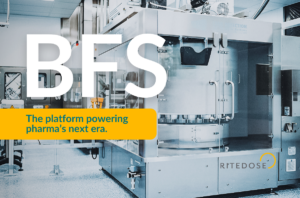
Advanced manufacturing technologies are an important part of that resilience. Blow-Fill-Seal (BFS) manufacturing, for example, integrates container formation, filling and sealing into a single, enclosed and automated process. By reducing human intervention and limiting exposure to the surrounding environment, BFS helps lower contamination risk while supporting consistent, high-quality output. The efficiency and repeatability of this approach can make it well-suited for products that require dependable, long-term supply. A manufacturing technology like BFS is a risk-mitigation strategy that strengthens the reliability of essential drugs.
Generic Pricing Challenge
One of the most persistent and least understood contributors to drug shortages is pricing pressure in the generic drug market. Many essential drugs are subject to years of price erosion driven by intense competition, purchasing dynamics and reimbursement structures that prioritize the lowest possible cost. It’s become a race to the bottom, which leaves manufacturers operating on razor-thin margins. It’s not uncommon for those poor margins to lead a manufacturer to the realization that sustaining production becomes economically unviable.
When margins are compressed, manufacturers may delay equipment upgrades, defer expansion plans, or exit the market altogether. This increases vulnerability to supply disruption.
This economic reality helps explain why so many shortages occur in older, clinically essential drugs rather than in newer, branded treatments. When a product generates limited financial return, there is little incentive to invest in modern manufacturing technologies, build backup capacity, or onshore production. As a result, the supply of these drugs becomes increasingly fragile, dependent on a small number of producers with limited ability to absorb shocks.
A CDMO’s Role
Contract development and manufacturing organizations (CDMOs) like Ritedose play an increasingly important role in this landscape.
Beyond providing additional capacity, experienced sterile CDMOs can serve as strategic partners in maintaining supply continuity. They can help transfer legacy products into more modern, reliable manufacturing platforms, establish secondary production sites and apply advanced technologies that improve consistency and reduce risk.
In a market where some manufacturers may step away from lower-margin products, these partnerships can help ensure that medically necessary drugs remain available to the patients who depend on them.
Addressing Shortages
Preventing drug shortages is a great challenge. It requires sustained investment in facilities, technology and people. It requires a culture that prioritizes quality and reliability as much as speed and efficiency. And it requires an understanding that for many therapies, especially sterile generics, dependability is itself a form of innovation.
Reliable access to essential drugs is at the core of a strong healthcare system. By combining advanced manufacturing approaches, strong quality systems and a long-term commitment to domestic sterile capacity, the industry can take meaningful steps toward a more resilient supply of critical formulations. This is something that our industry owes to the patients who rely on our products. They need to know that their treatments will be there when they’re needed the most.