Ritedose, University of South Carolina Welcome Top European Business Students for Immersive Learning about Advanced Manufacturing

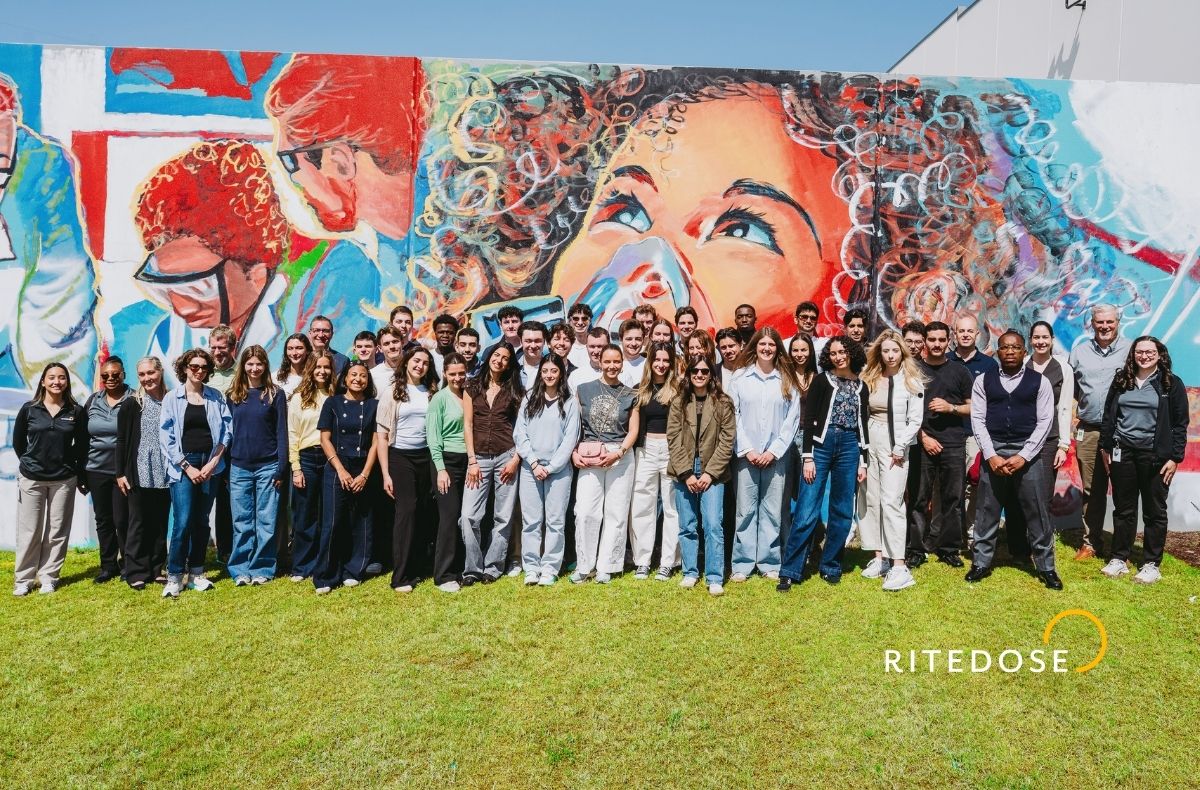
ESCP Business School students visiting Ritedose Manufacturing Center of Excellence at University of South Carolina partnership event

– Collaboration showcases the Ritedose Center of Excellence as a global hub for advanced manufacturing education.
– The Center of Excellence serves as a cornerstone of Ritedose’s broader commitment to workforce development and industry leadership.

COLUMBIA, S.C. — April 23, 2026 — The Ritedose Corporation (Ritedose), the nation’s leading contract development and manufacturing organization (CDMO) specializing in sterile Blow-Fill-Seal (BFS) production, welcomed 45 international business students from ESCP Business School April 22 as part of an academic exchange that highlighted global leadership and innovation in pharmaceutical manufacturing. 

The students, who represent Europe’s oldest and most prestigious business school, visited Ritedose as part of a broader academic program hosted in partnership with the University of South Carolina Darla Moore School of Business. The ESCP students engaged with Ritedose leadership and subject matter experts to gain firsthand insight into the complexities of pharmaceutical manufacturing, supply chain strategy and the evolving business of healthcare. 

The visit took place at Ritedose’s Center of Excellence, a purpose-built environment designed to foster leadership development, technical education and cross-functional collaboration in advanced manufacturing. 

“This visit reflects the growing recognition of our Center of Excellence as a destination for learning,” said Janisha Thomas, Chief Human Resources Officer at Ritedose. “We’ve intentionally built a space where future leaders, industry professionals and our own internal teams can deepen their understanding of pharmaceutical manufacturing and its impact on patients.” 

During their Ritedose visit, the ESCP students heard from seasoned Ritedose employees, who offered perspectives across manufacturing operations, quality systems, regulatory considerations and commercial strategy. The sessions were designed to bridge academic theory with real-world applications. The forum provided a comprehensive view of how pharmaceutical drugs are developed, produced and delivered at scale. 

The Center of Excellence serves as a cornerstone of Ritedose’s broader commitment to workforce development and industry leadership. By hosting academic institutions, training programs and cross-sector collaborations, Ritedose continues to position itself at the forefront of advancing knowledge in sterile manufacturing and the global pharmaceutical supply chain. 

“The Moore School is deeply committed to preparing students for the realities of a global economy, and that means connecting them with organizations that are leading their industries. Having a company of the caliber of Ritedose that has a commitment to education and workforce development right here in our backyard is beneficial to our students and partners around the world. We are grateful for this collaboration and proud to bring ESCP Business School to Columbia to experience it firsthand,” said Greg Niehaus, Interim Dean at the University of South Carolina’s Darla Moore School of Business. 

Ritedose’s investment in its Center of Excellence underscores its belief that innovation in pharmaceutical manufacturing is not only driven by technology, but by people who are equipped with the knowledge and perspective to meet evolving patient needs. 


About Ritedose 

Ritedose is the largest sterile contract development manufacturing organization (CDMO) in the US specializing in sterile Blow Fill Seal (BFS) technology that ensures sterile, consistent, and safe unit dose delivery. The company’s process guides the development of molecules from clinical trials to commercialization of branded and generic inhalation and ophthalmic medications. With a focus on quality, innovation, and customer satisfaction, Ritedose partners with leading pharmaceutical companies to deliver safe, effective, and reliable medications that improve patient outcomes. For more information about Ritedose and its services: visit Ritedose.com . 

About the Darla Moore School of Business 

The Darla Moore School of Business at the University of South Carolina is among the highest-ranked business schools in the world. Well known for international business education and research, the school also has highly ranked operations and supply chain programs at both the undergraduate and graduate levels and ensures that all undergraduates and most graduate students leave the school data proficient, analytically capable and functionally based. Founded in 1919, the school has a history of innovative educational leadership, blending academic preparation with real-world experience through internships, consulting projects, study abroad programs and entrepreneurial opportunities. The Moore School offers undergraduate, master’s and doctoral degrees, as well as distinctive executive education programs. In 1998, the school was named for South Carolina native and New York financier Darla Moore, making the University of South Carolina the first major university to name its business school after a woman. Learn more at sc.edu/moore. 
Frequently Asked Questions

What is the Center of Excellence at Ritedose?

Summary: The Ritedose Center of Excellence supports knowledge, innovation, training, and operational excellence in pharmaceutical manufacturing.

Full answer: The Center of Excellence at Ritedose serves as a hub for education, collaboration, research, and industry advancement. It provides opportunities for students, professionals, and industry partners to learn about manufacturing technologies, quality systems, operational processes, and best practices that support pharmaceutical product development and production.

Why are pharmaceutical industry visits valuable for students?

Summary: Industry visits help students connect academic learning with real world pharmaceutical manufacturing operations.

Full answer: Classroom education provides foundational scientific knowledge, but industry visits allow students to see how those concepts are practically applied. By observing manufacturing environments, quality systems, and operational processes, students gain a deeper understanding of pharmaceutical production and the skills needed to succeed in the industry.

How do pharmaceutical manufacturers support workforce development?

Summary: Pharmaceutical manufacturers support workforce development through education, training, mentorship, and industry engagement.

Full answer: Developing future industry professionals requires collaboration between educational institutions and manufacturers. Facility tours, student visits, internships, mentorship programs, and educational partnerships help students gain practical exposure to pharmaceutical manufacturing while building the knowledge and skills needed for future careers.

Why is collaboration between academia and industry important?

Summary: Collaboration helps bridge the gap between scientific education and pharmaceutical manufacturing practice.

Full answer: Academic institutions provide scientific and technical training, while industry offers practical experience and real world application. Working together allows students to gain a broader understanding of pharmaceutical development, manufacturing, quality assurance, and regulatory expectations, helping prepare them for successful careers in the field.

What can students learn during a pharmaceutical manufacturing facility visit?

Summary: Students can learn about manufacturing processes, quality systems, technology, compliance requirements, and operational excellence.

Full answer: Facility visits provide firsthand exposure to the pharmaceutical manufacturing environment. Students may observe production operations, quality control procedures, advanced technologies, workforce collaboration, and systems used to support product quality and patient safety. These experiences help transform theoretical knowledge into practical understanding.

How does exposure to pharmaceutical manufacturing benefit future professionals?

Summary: Industry exposure helps students understand career opportunities and workplace expectations.

Full answer: Experiencing a pharmaceutical manufacturing environment allows students to explore potential career paths while gaining insight into daily operations. This exposure helps students understand the importance of quality, compliance, teamwork, innovation, and problem solving in pharmaceutical manufacturing and related fields.

Why is experiential learning important in pharmaceutical education?

Summary: Experiential learning helps students apply classroom concepts to real world situations.

Full answer: Hands on learning complements traditional academic instruction by allowing students to observe how pharmaceutical manufacturing principles are implemented. Facility visits, demonstrations, and industry interactions help reinforce technical knowledge while providing a clearer understanding of manufacturing operations and industry standards.

How does a Center of Excellence contribute to pharmaceutical innovation?

Summary: A Center of Excellence encourages collaboration, knowledge sharing, and continuous improvement across the industry.

Full answer: By bringing together students, educators, industry professionals, and technology experts, a Center of Excellence can create opportunities for learning and innovation. These environments help foster discussions about emerging technologies, manufacturing advancements, quality improvements, and future industry challenges while supporting ongoing professional development.

What role does education play in the future of pharmaceutical manufacturing?

Summary: Education helps prepare future professionals who support innovation, quality, and operational excellence.

Full answer: Education plays a critical role in the future of pharmaceutical manufacturing by helping develop the skilled workforce, technical expertise, and innovative mindset needed to meet evolving demands. Educational programs, industry partnerships, and practical learning experiences help prepare talent for manufacturing, quality assurance, research, and pharmaceutical operations.

How can student engagement strengthen the pharmaceutical industry?

Summary: Student engagement helps build a pipeline of future professionals equipped to support industry growth and innovation.

Full answer: Engaging students through facility visits, educational partnerships, and professional development opportunities helps inspire interest in pharmaceutical manufacturing careers. These experiences provide industry exposure while helping students develop the knowledge and confidence needed to contribute to manufacturing, quality, and patient focused innovation.

– Collaboration showcases the Ritedose Center of Excellence as a global hub for advanced manufacturing education.
– The Center of Excellence serves as a cornerstone of Ritedose’s broader commitment to workforce development and industry leadership.

SHARE

Media Inquiries

Schedule your interview and learn more about the Ritedose Company.

What Does it Mean to be a Manufacturer of Choice?
Ritedose Reaches “1,000 Hours of Purpose”
Previous Post
What Does it Mean to be a Manufacturer of Choice?
Next Post
Ritedose Reaches “1,000 Hours of Purpose”

Accessibility