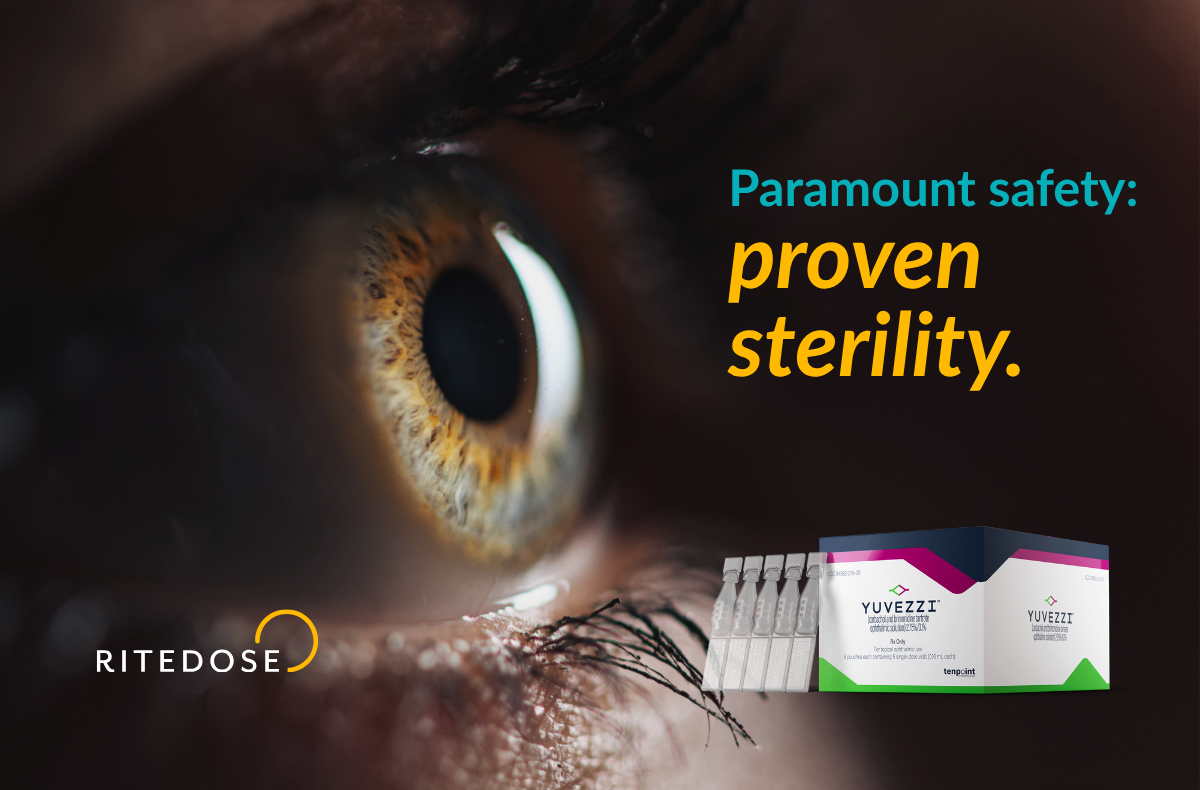
An FDA eye drop recall involving sterility concerns highlights the critical role of cGMP compliance, aseptic processing, and Blow-Fill-Seal technology in safe ophthalmic drug manufacturing.
In March, the US Food and Drug Administration announced a recall of about three million bottles of eight over-the-counter (generic) eye drop drugs used to treat dry or irritated eyes, because of what the agency called a “lack of assurance of sterility.” The drugs were available at consumer drug and grocery stores across the country.
The FDA Class II recall means there is a possibility of reversible medical problems but that the occurrence of serious medical problems is remote. The recall, which marked the third time this company had run into problems with the FDA, was based on the fact that the manufacturer could not verify testing for sterility. While this sounds like a paperwork error, verification of processes is vitally important to drug-making, and the sheer scale and number of incidents indicates a fundamental problem.
Eyes are particularly vulnerable
Eye treatments need the absolute highest standards of sterility. This is because, like any product, bacteria and fungi grow in it, but can lead to severe infections, almost more than any other organ in the body. This is because the immune system isn’t as available in certain parts of the eye as it is in other organs, so immune cells can’t offer the same protection to parts of the eye. While this unique immune-anatomical quirk evolved to protect the eye from an overactive immune response, it leaves the organ more vulnerable to infection.
This vulnerability means that it is all the more important to ensure that any drug that’s applied to the eyes is unquestionably sterile. For Ritedose, the nation’s largest manufacturer of ophthalmic drugs uses Blow-Fill-Seal (BFS) technology, an aseptic process designed to avoid just the types of problems cited in the FDA recall. In addition, Ritedose takes extra steps to ensure and verify that its eye products are contamination-free.
FDA recall details
The 2026 recall followed a 2023 warning letter from the FDA to the same company (which in turn, was a follow up to a 2018 visit from the agency), addressing the same issues. In the 2023 warning letter, the FDA cited that the company:
“Used methods, facilities or controls for manufacturing, processing, packing, or holding that do not conform to cGMP.
Failed to establish and follow appropriate written procedures that are designed to prevent microbiological contamination of drug products purporting to be sterile, and that includes validation of all aseptic and sterilization processes”
The FDA letter continues:
“Smoke studies for your aseptic processing lines were not performed under conditions that adequately simulate actual manufacturing.
Operators are seen conducting interventions on this aseptic filling line with their arms and hands, by reaching through open ports.”
What a cGMP process with BFS prevents
Any cGMP process would ensure aseptic processing and provide for validation of processes with written procedures and follow up data. cGMP sterile processes in general, and Blow-Fill-Seal (BFS) in particular, would prohibit any filling and manipulating products with arms and hands (at the very least, it’s unnecessary!).
The 2023 inspection was part of a wider FDA investigation of eye drug manufacturers, in reaction to a series of rare Pseudomonas bacterial eye infections was reported. During that outbreak, 81 people had severe eye infections, 14 of whom suffered vision loss, four people had their eyeballs removed and another four people died. The FDA also found that manufacturers were not following cGMP antiseptic procedures, allowing the bacteria to infiltrate their products.
BFS has advantages—but no “Get out of jail free” card
Because it is a fully automated process, Blow-Fill-Seal (BFS) has little to no human intervention. BFS involves blowing material (usually polymer) into a mold to create the product container, filling automatically with drug product, and then sealing the top of the container. It is cGMP compliant and considered the most advanced aseptic processing method available today.
However, it’s no “Get out of jail free” card. Just adopting BFS in a facility is no guarantee of eliminating microbial problems. In fact, the FDA has cited firms for sterility problems, even though those companies use BFS. It’s important to bolster BFS with overall aseptic conditions and ISO-compliant facilities to verify aseptic conditions and document testing of facilities and equipment.
Specifically, BFS was developed to avoid traditional manufacturing processes that have at least increased the risk of introducing pathogens and contaminants. BFS eliminates the need for hands-on manufacturing and handling of drug containers and filling those containers with drugs in open areas with people who can introduce contamination. The technology also makes it easier to use plastic containers, which are lighter weight, less expensive and more breakage-resistant than glass.
BFS with eye drugs, done right
Earlier this year, Ritedose partnered with Tenpoint Therapeutics, Ltd., to make YUVEZZI, a first-in-class drug to treat presbyopia with eye drops, for the United States market. We’ve earned this trust because of our decades-long record of safety and reliability.
About The Ritedose Corporation
Ritedose is the largest sterile contract development manufacturing organization (CDMO) in the US specializing in sterile Blow Fill Seal (BFS) technology that ensures sterile, consistent, and safe unit dose delivery. The company’s process guides the development of molecules from clinical trials to commercialization of branded and generic inhalation and ophthalmic medications. With a focus on quality, innovation, and customer satisfaction, Ritedose partners with leading pharmaceutical companies to deliver safe, effective, and reliable medications that improve patient outcomes. Ritedose: Passion and Precision with a Purpose. For more information visit Ritedose.com