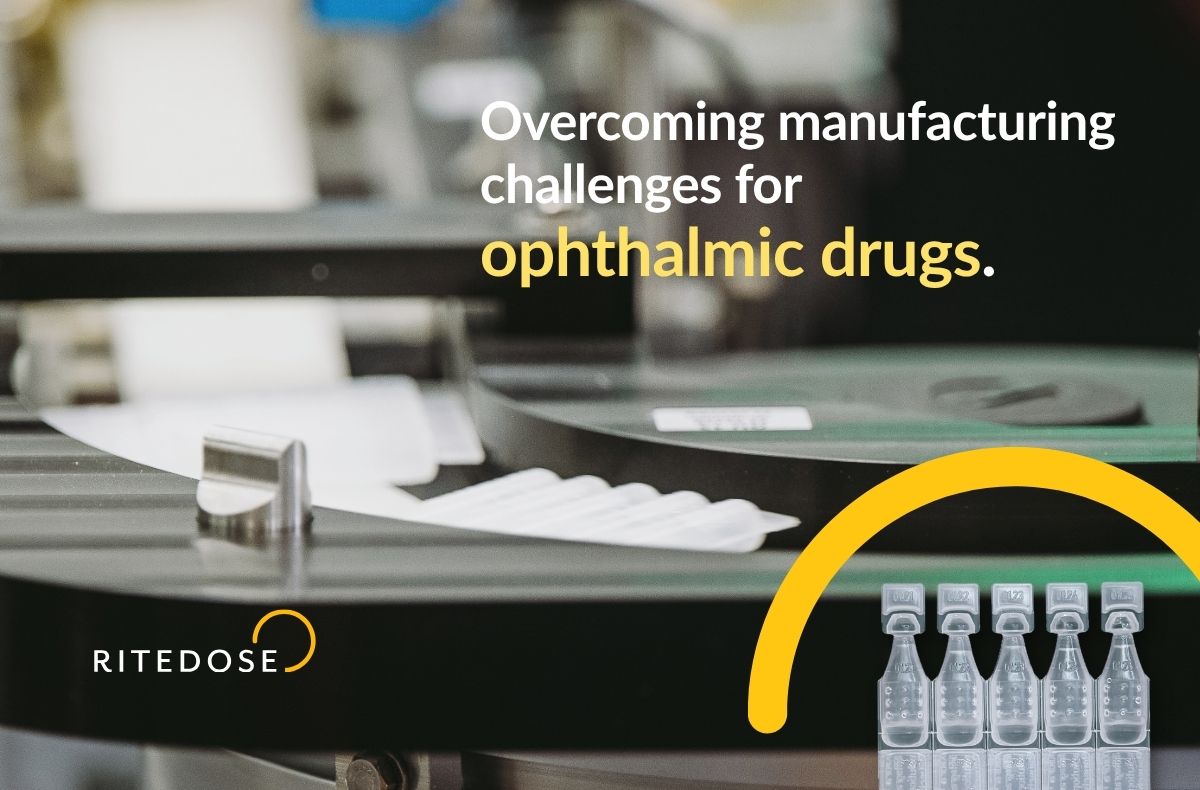
Preservatives like benzalkonium chloride can irritate the eye, especially with long-term use. Removing them makes manufacturing even more important. Learn how sterile Blow-Fill-Seal (BFS) technology and single-unit packaging help ophthalmic drug developers maintain microbial control without relying on preservatives.
Eye drops are one of the most common ways medications are delivered in ophthalmology. They are used to treat chronic conditions such as glaucoma and dry eye disease, as well as acute infections, inflammation, allergies and conditions associated with surgery.
For many ophthalmic products, particularly those intended for repeated use, maintaining microbial control is essential. Preservatives can provide protection in multidose containers. But for patients who rely on ophthalmic medications over extended periods, exposure to certain preservatives can raise concerns about ocular-surface tolerability.
That has increased interest in preservative-free ophthalmic formulations. Removing preservatives does not remove the need for microbial control. Instead, it places greater importance on the manufacturing and packaging processes used to protect the product.
For pharmaceutical developers, that makes the choice of manufacturing technology an important part of preservative-free ophthalmic drug development.
Taking a Preservative-Free Approach
At Ritedose, we manufacture single-unit preservative-free ophthalmic drugs, which eliminates the need for preservatives used to protect multidose containers after opening. Ritedose is the largest sterile contract development manufacturing organization (CDMO) in the US specializing in sterile Blow-Fill-Seal (BFS) technology, a process that reduces operator intervention and supports sterile manufacturing.
This manufacturing route requires strict aseptic processing. Microbial control relies on a combination of:
- Aseptic manufacturing
- Controlled facility and distribution environments
- Validated processes
- Sterility assurance
- Container closure integrity
- Environmental monitoring
- Strong quality systems
With these strict processes in place, Ritedose eliminates the need for preservative-based protection, while controlling microbial contamination with sterile manufacturing and sealed unit-dose packaging.
Some Problems with Preservatives
Benzalkonium chloride (BAK), a quaternary ammonium compound, is one of the most widely used preservatives in ophthalmic medications. It’s also used as an antiseptic agent in a wide variety of facilities to prevent contamination and is in 70% of preserved ophthalmic formulations.
Research illustrates the challenge of using BAK as a preservative. It has been shown to disrupt the corneal epithelium, enabling pro-inflammatory chemicals to enter tissues deeper in the eye. It can cause cell damage to conjunctiva and corneal cells, and result in conjunctival goblet cell loss (cells that produce the mucin layer of tear film). BAK can reduce mucin secretion and tear cell stability and is even associated with precancerous cell generation. In studies with glaucoma patients, between 30% and 70% of patients using BAK-preserved drugs developed ocular surface disease, and experience corneal barrier deficiency, dry eye, and pain. These issues are more pronounced with chronic use, such as in glaucoma therapy.
Some studies show a clear advantage of using preservative-free formulations (if product sterility is maintained). An epidemiological survey of 4,107 glaucoma patients found that ocular symptoms (burning, stinging, foreign object sensation, dry eye, tearing and itching) were more prevalent when taking preserved eye drops than when taking preservative-free drops. In addition, an analysis of Phase III clinical trials showed that switching from preserved to preservative-free versions of a prostaglandin substitute was associated with a reduction of these ocular symptoms by two-thirds.
Concerns with BAK Alternatives
There are alternative preservatives to BAK, but there are some concerns with toxicity or an inability to meet some antimicrobial efficacy standards.
- Polyquad (polyquaternium-1) is a large molecule that doesn’t harm mammalian cells but can produce inflammation and irritation with continuous use.
- Purite kills bacteria and viruses and breaks down faster but may not meet some strict regulatory requirements.
- SofZia is gentler and kills bacteria that lack cytochrome oxidase or catalase (human cells have these enzymes and are thus not harmed). Antimicrobial action does not meet European Community criteria.
- Sodium perborate causes severe eye damage, respiratory irritation and possible reproductive harm, is banned in European Union cosmetics and soon will be banned in California.
Choosing BFS
Blow-Fill-Seal (BFS) manufacturing technology uses a mechanized process to blow container materials into a mold, fill the container with product and then seal it, making it ready for distribution. The value of BFS for preservative-free ophthalmics extends beyond the container itself. The technology is part of a broader manufacturing system in which microbial control must be considered at every stage. That includes the facility and manufacturing environment, equipment, processes, personnel, environmental monitoring and quality systems.
As a sterile CDMO specializing in BFS technology, Ritedose brings together manufacturing and packaging capabilities designed for products where sterility and reliable delivery are critical.
The approach also gives pharmaceutical developers an alternative to relying on preservatives for microbial protection in multidose containers.
Supporting the Future of Preservative-Free Ophthalmics
Improved drug manufacturing methods for sterile products are coming at a time when global markets for eye drops are growing. Glaucoma is rising in prevalence, while dry eye is found in up to one-third of some groups. Many of these are age-related conditions, and their chronic nature underscores the need for safe, effective long-term therapies. Through sterile BFS manufacturing and single-unit packaging, Ritedose provides pharmaceutical developers with a manufacturing platform designed to support preservative-free ophthalmic drug delivery.
About The Ritedose Corporation
Ritedose is the largest sterile contract development manufacturing organization (CDMO) in the US specializing in sterile Blow Fill Seal (BFS) technology that ensures sterile, consistent, and safe unit dose delivery. The Company’s process guides the development of molecules from clinical trials to commercialization of branded and generic inhalation and ophthalmic medications. With a focus on quality, innovation, and customer satisfaction, Ritedose partners with leading pharmaceutical companies to deliver safe, effective, and reliable medications that improve patient outcomes. For more information about Ritedose and its services: visit Ritedose.com.