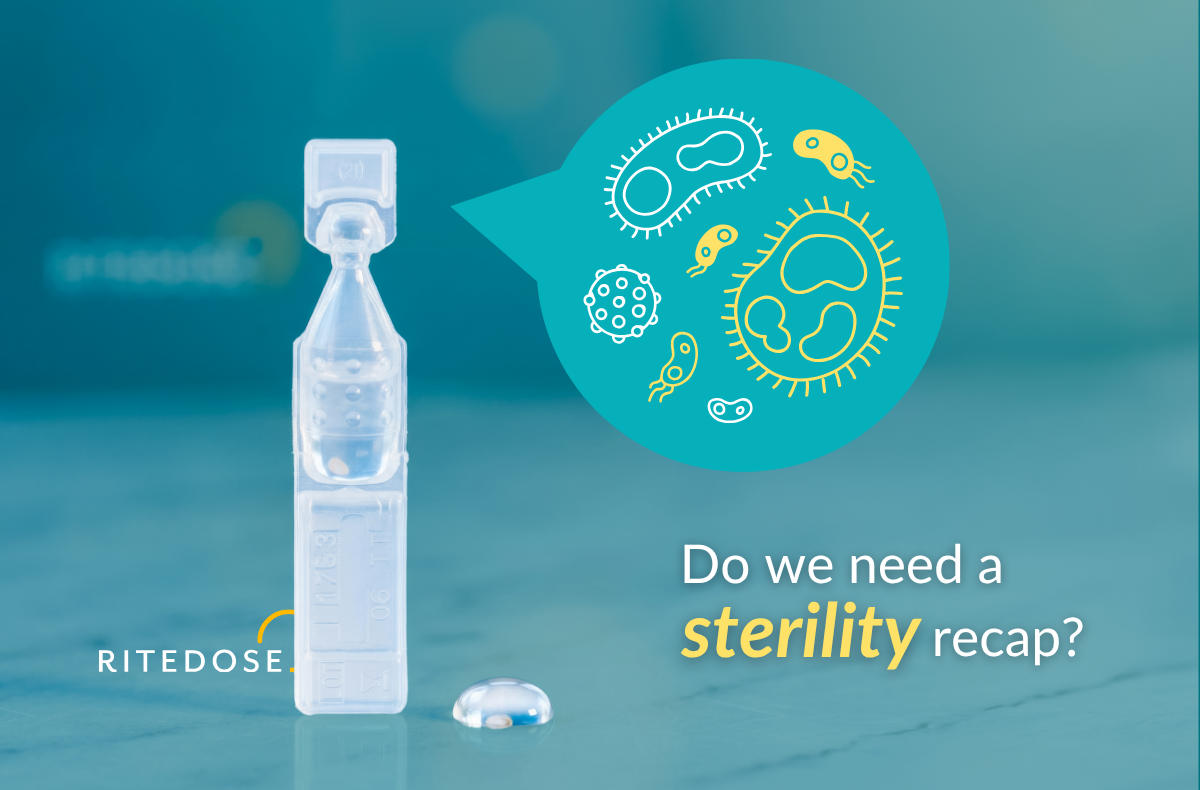
A vial may look protected after being closed again, but sterility cannot be restored once a single-use ophthalmic vial has been opened.
The growth of preservative-free ophthalmic therapies has transformed the treatment landscape for patients managing conditions such as dry eye disease and glaucoma, as well as those recovering from ophthalmic procedures who may be sensitive to preservatives.
As demand for preservative-free eye drops grows, so does the use of single-use delivery formats designed to protect product quality, minimize contamination risk and support patient safety.
Yet a common misconception remains: some patients mistakenly believe that recapping a single-use vial restores its original sterile condition.
It does not.
Once a single-use container is opened, sterility cannot be ensured. While a vial may appear protected after being closed, the difference between a sealed sterile product and an opened container is significant — and understanding why begins with the science of advanced manufacturing.
What Does “Sterile” Actually Mean?
When a pharmaceutical product is labeled sterile, it means more than simply being “clean.” It represents a product manufactured under rigorously controlled conditions designed to prevent microbial contamination from bacteria, fungi, viruses and other microorganisms that could compromise patient safety or product quality.
Achieving sterility requires a complex, highly controlled process. Facilities must maintain classified cleanrooms with regulated airflow, temperature, humidity and particulate levels. Raw materials, containers and equipment undergo validated sterilization processes, while personnel follow strict protocols to minimize one of the greatest sources of contamination: human interaction.
Sterile manufacturing is continuously monitored and governed by current Good Manufacturing Practice (cGMP) standards that oversee every stage of production.
Single-use ophthalmic vials are designed with a specific purpose: open, administer as prescribed and discard — even when liquid remains. Once opened, the sterile barrier becomes compromised. Replacing the cap does not recreate the original manufacturing conditions or restore the product’s integrity established during production.
The FDA’s 2023 regulatory guidance on Quality Considerations for Topical Ophthalmic Drug Products drives this point home: “For preservative-free unit-dose products, once they are opened, they should be used immediately and discarded.”
At Ritedose, sterile manufacturing is built on a foundation of precision, vigilance and accountability. Every dose reflects a commitment to quality and the understanding that sterility is a promise to the patient — protecting the therapies they rely on when it matters most.
Why Do Patients Reuse Single-Use Vials?
The decision to reuse a single-use vial is often driven by practical considerations. People using single-use vials may notice that liquid remains in the container after applying their prescribed dose and wonder why they should discard medication that appears unused.
Other reasons include:
- A desire to reduce waste
- Concerns about medication costs
- The assumption that a closed container remains protected
- Familiarity with reusable consumer products
Although there may be some remaining liquid, that does not mean the product remains suitable for use.
Contamination Can Happen Faster Than Many Realize
Every time a single-use vial is opened, it can be exposed to potential sources of contamination, including:
- Airborne particles
- Bacteria from hands and fingers
- Eyelashes or skin
- Countertops, bags or other surfaces
For preservative-free ophthalmic products, this is especially important. Preservatives are sometimes used in multi-dose eye drops to help limit microbial growth after repeated use. Single-use preservative-free formats are designed differently — they rely on the integrity of the unopened package and proper administration practices.
The Microbiological Illusion of Recapping
One of the biggest misconceptions about single-use vials is that closing the container makes it “safe” again.
This creates a false sense of security.
A capped vial may look exactly as it did before first being opened, but its sterile status has changed. The cap can prevent additional exposure, but it does not remove contaminants that may have already entered the vial or touched the opening. This is why single-use instructions matter. They are based on the science of maintaining sterility — not simply keeping a container closed.
Why This Matters for Ophthalmic Patients
The eye is particularly sensitive to foreign materials and microorganisms. Introducing contaminants during administration can create unnecessary risks and compromise the intended benefits of a therapy. Because the ocular surface is delicate and highly exposed, even small amounts of microbial contamination or particulate matter can interfere with treatment, trigger irritation, or contribute to adverse reactions.
Some of the most common infections from microbial contamination include:
- Bacterial conjunctivitis: Inflammation and infection of the conjunctival surface
- Bacterial keratitis: Corneal infection that can progress rapidly to corneal ulceration, stromal thinning, perforation, and permanent visual impairment.
- Fungal keratitis (keratomycosis): Infections with Aspergillus, Fusarium, or Candida species, which are exceptionally difficult to treat and are associated with poor visual outcomes and high rates of corneal transplantation requirement
- Endophthalmitis: Intraocular infection representing a sight-threatening emergency.
- Acanthamoeba keratitis: A rare but devastating protozoan corneal infection that is strongly associated with contaminated topical ophthalmic solutions, particularly in contact lens wearers
Following instructions for single-use ophthalmic products helps ensure that patients receive medication as designed — with product quality maintained from manufacturing through administration.
Protecting Patients Through Better Delivery
Innovation in ophthalmics is not only about developing new molecules. It is also about ensuring therapies are delivered in ways that support safety, reliability and real-world patient use.
That begins with manufacturing.
Advanced sterile manufacturing approaches, including Blow-Fill-Seal (BFS) technology, enable closed, unit-dose systems designed to minimize human interaction and protect product integrity.
Ritedose’s BFS process integrates container formation, filling and sealing into a single continuous system — reducing opportunities for contamination associated with traditional multi-step packaging processes. Underpinned by integrated lab management systems that maintain oversight and consistency throughout production, this approach supports the production of preservative-free ophthalmic therapies in sterile, ready-to-use formats that help maintain quality from manufacturing through administration.
With decades of BFS expertise, Ritedose combines precision-driven sterile processing, specialized equipment and rigorous quality controls to manufacture billions of unit doses annually. The company’s ophthalmic capabilities support growing demand for single-use delivery systems that provide patient convenience while helping pharmaceutical partners meet the highest standards for sterility, consistency and reliability.
At Ritedose, the patient is our why. Every dose represents a commitment to quality, safety and ensuring patients receive their medications as intended. Patient safety does not end when a product leaves the manufacturing facility — it continues with every administration and every step that protects the integrity of the therapy.